
Monday, May 30, 2011
A Fan-tailed Warbler in Arizona, 2011-05-24


Monday, March 28, 2011
Port Aransas Little Gull, 2011-03-28

Monday, March 14, 2011
Pena Blanca Sapsuckers 2011-03-14


Saturday, January 1, 2011
Pena Blanca Highlights 2010-12-31
A few shots from my New Year's Eve day visit to Pena Blanca Lake with friends. The images are thumbnails and can be enlarged by clicking on them.

Three of the Least Grebes present at Pena Blanca Lake. One is a yellow-eyed adult, while the remaining two are younger birds. If I'm interpreting bill differences correctly, the two young birds are males traveling around with their smaller-billed mother.
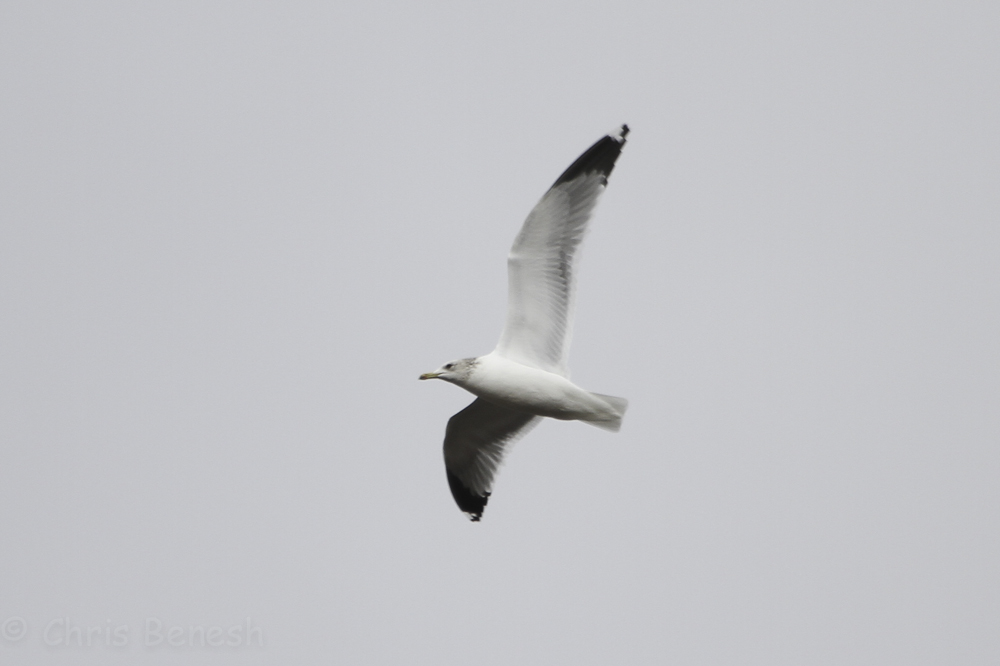
This adult California Gull spent the entire time circling over the northern half of the lake.

The continuing Yellow-bellied Sapsucker also showed well today.
Thursday, December 30, 2010

Monday, August 16, 2010
California Condors Twenty-five Years Later
Back on August 27, 1981, my father and I went searching for condors on Mt. Pinos in southern California. After hours of searching, we were fortunate to have two adults fly right over our heads at the lookout there. At the time, there were no more than 20 something birds left in the wild. It was a breathtaking experience and one that galvanized my interest in birds and endangered species. A couple of years later, my buddy Hugh and I made a trip up to the same mountains and again had some wonderfully close condors. These were some of the last free-flying condors left in the wild.
It seems amazing that some twenty-five years has passed since my last encounter with this critically endangered species. A previous visit to the Grand Canyon for condors was weathered out, so I was determined to have a look on my way home from a Las Vegas concert weekend. I arrived about 4:45 pm at the south rim of the canyon. Within about ten minutes I had spotted the first one, thanks to a tip from a passing walker. After scoping it from a distance, I decided to find a closer vantage point and was rewarded with some fantastic views of one. After viewing it for a few minutes, it did some wing stretches and took flight before departing to the west. While celebrating the moment with a family of curious tourists, a second bird appeared circling nearby. These one spiraled closer and closer before settling on a rock almost directly below us. I set up my scope on this bird and a number of curious tourists took turns enjoying this rare creature.
The first condor seen appears to be #223, sporting tag number 3 on its left wing. The right wing tag seems to be missing. This male bird was hatched on April 18, 2000 and originally released in February 2001. The second condor seen is #246 (tag number 46). Another male, this one was born April 29, 2001. Both birds were hatched at the World Center for Birds of Prey in Boise, Idaho. At last count, there are some 372 condors living, 75 of these are free-flying birds that regularly visit the Grand Canyon region. In recent years, these birds have been spending a lot of time in southern Utah.
It seems amazing that some twenty-five years has passed since my last encounter with this critically endangered species. A previous visit to the Grand Canyon for condors was weathered out, so I was determined to have a look on my way home from a Las Vegas concert weekend. I arrived about 4:45 pm at the south rim of the canyon. Within about ten minutes I had spotted the first one, thanks to a tip from a passing walker. After scoping it from a distance, I decided to find a closer vantage point and was rewarded with some fantastic views of one. After viewing it for a few minutes, it did some wing stretches and took flight before departing to the west. While celebrating the moment with a family of curious tourists, a second bird appeared circling nearby. These one spiraled closer and closer before settling on a rock almost directly below us. I set up my scope on this bird and a number of curious tourists took turns enjoying this rare creature.
The first condor seen appears to be #223, sporting tag number 3 on its left wing. The right wing tag seems to be missing. This male bird was hatched on April 18, 2000 and originally released in February 2001. The second condor seen is #246 (tag number 46). Another male, this one was born April 29, 2001. Both birds were hatched at the World Center for Birds of Prey in Boise, Idaho. At last count, there are some 372 condors living, 75 of these are free-flying birds that regularly visit the Grand Canyon region. In recent years, these birds have been spending a lot of time in southern Utah.
 |
| Condor #223 sits on a rock outcropping shortly before taking flight for parts unknown. |
 |
| Condor #246 soaring out over the Grand Canyon. It is in flight that the massiveness of these birds becomes most apparent. |
 |
| Condor #246 coming closer as he prepares for a landing. |
 |
| Condor #246 at rest below us. He was quite the tourist attraction on this Sunday afternoon. |
Friday, April 30, 2010
A Weird Oriole at Cottonwood Campground
On Thursday April 29th I was birding with a group at Cottonwood Campground in Big Bend National Park. It was mid-morning and we were looking over some birds at the group camp site which is located at the east end of the complex. At one point, a couple of clients asked about the identity of a certain oriole. I glanced at the bird and initially thought Hooded Oriole. Distracted by an Ash-throated Flycatcher, I did not spend any time studying the oriole. Eventually, I decided to photograph since it was sitting out so nicely. As I focused on it, I noticed that it was not what I had initially taken it to be. As soon as I took the first exposure, it turned and flew directly away out of the campground beyond some mesquites and out of sight. Looking at the photo, I immediately had the hunch that this was some sort of hybrid, and the orange that I was seeing in the tail as well as the bill coloration made me suspect that a Bullock's Oriole was involved. Despite spending some additional time trying to relocate the bird, it was not seen again.
To me, the bird's structure looks intermediate between that of a Hooded and a Bullock's Oriole. The tail seems strongly graduated, which is unusual. The photo gives the impression of there being a great deal of white in the wing panel, though I did not notice this in life. One of the clients specifically commented on how much white there was present.
The bird also somewhat resembles a Streak-backed Oriole, though the tail pattern seems off for that. In addition, the body was more extensively orange than is typical of northern populations of Streak-backed which tend to be most intensely orange around the head. I would enjoy getting feedback and insight from others regarding the identity of this peculiar bird.


To me, the bird's structure looks intermediate between that of a Hooded and a Bullock's Oriole. The tail seems strongly graduated, which is unusual. The photo gives the impression of there being a great deal of white in the wing panel, though I did not notice this in life. One of the clients specifically commented on how much white there was present.
The bird also somewhat resembles a Streak-backed Oriole, though the tail pattern seems off for that. In addition, the body was more extensively orange than is typical of northern populations of Streak-backed which tend to be most intensely orange around the head. I would enjoy getting feedback and insight from others regarding the identity of this peculiar bird.


Monday, February 22, 2010
Rocky Point Gull Workshop
The first ever joint Arizona Field Ornithologists and Tucson Audubon Society gull workshop was held in Puerto Peñasco, Sonora on February 20-21, 2010. Fifteen participants from central and southeast Arizona converged on Rocky Point to sample from the diversity of this gull rich area and to brush up on their gull identification skills. Chris Benesh and Dave Stejskal led the outing. In total, ten species of gulls were seen, along with a few interesting hybrids. Two additional species (Mew and Glaucous-winged gulls) were detected during scouting, but did not put in an appearance during the workshop. Other interesting sightings included a first cycle California Gull with a band indicating it was banded as a chick last summer at Mono Lake, in eastern California (home of the second largest colony of California Gulls), and an amelanistic Yellow-footed Gull. A list of gulls seen includes Bonaparte's, Ring-billed, Heermann's, California, Lesser Black-backed, Thayer's, American Herring, Western, Yellow-footed, and Glaucous gulls. Hybrids included Western X Glaucous-winged and Am. Herring X Glaucous-winged.


Some of the many elegant Heermann's Gulls that frequent Rocky Point.

Yellow-footed Gull one of the real highlights of the northern Sea of Cortez.

This amelanistic Yellow-footed Gull stood out in the masses. Looking all the world like a white-winged gull, its massive proportions helped indicate its real identity.

Another white-winged gull in the crowd was this second cycle Glaucous Gull that put in a brief appearance.

This first cycle Thayer's Gull was one of a few seen over the two days of birding.

A first cycle Western Gull stands next to a first cycle Yellow-footed Gull. At one time these two were considered the same species.

This first cycle California Gull sports a band it received at Mono Lake, California this past summer. Mono Lake has the second largest colony of this species.

Small numbers of these tern-like Bonaparte's Gulls were evident at the sewage ponds.

A third cycle Olympic Gull (Western X Glaucous-winged) was present at the landfill.

A first cycle Lesser Black-backed Gull that was present for two days at the sewage ponds.

The first of two Mew Gulls found at the landfill during workshop scouting.

The second Mew Gull that was briefly at the landfill during scouting.

Group scanning through masses of gulls in the late afternoon.
Thursday, November 26, 2009
Fork-tailed Swift in New Zealand

On the afternoon of November 26, 2009, Nick Quickert spotted a swift flying around the Penguin Place Yellow-eyed Penguin colony at Taiaroa Head near Dunedin, New Zealand. Once the group got my attention, I was able to see that it was a Fork-tailed Swift (a rarity for New Zealand). I was able to take some documentation quality images as it zoomed around (see attached composite image). Conditions were partly cloudy with extremely high winds. Photos © Chris Benesh.
Monday, March 23, 2009
A Tough Day to be a Coot

While birding yesterday at Laguna Atascosa in south Texas, my group and I came across a group of folks looking intently at something along the shores of a lagoon. When we went over to check it out, we realized that they were looking at an American Alligator in the process of eating an American Coot. At this point, the coot was already dead, yet the alligator spent a good deal of time tenderizing it before it eventually swam off with it still dangling in its mouth.
Friday, January 9, 2009
From the Fire Swamp come Rodents of Unusual Size
Looking remarkably like the Rodents of Unusual Size familiar to some from the Fire Swamp in The Princess Bride film comes the first ever video of an ancient lineage of mammals known as a Solenodons. The video features Solenodon paradoxus, a relict population that persists on the island of Hispanola in the caribbean. One of the many curious aspects of Solendons are that they possess a toxic saliva with a salivary duct placed at the base of a lower incisor. Not rodents at all, Solenodons are in their own family and traditionally placed in the order Insectivora, though recent treatments place them in the order Soricomorpha, which includes many shrews.
Monday, October 13, 2008
A Wonderful Day Out at Cheyne Beach


This morning I was out early (4:45 am to be exact) to seek out some of the rare birds found on the southern sea coast of Western Australia east of Albany. Not only did we have great luck with a couple of these, but I even managed to see a Noisy Scrubbird singing from a song perch. I have seen several of these crossing roads and paths, but this was the first time I actually saw one as it was singing. Quite an impressive sight! On top of that, the nearby bay was full of Southern Right Whales. There must have been at least nine animals, with several young calves swimming close to their mothers. They spend most of their time lazily swimming at the surface looking a lot like exposed rocky shoals that are in some of the bays in this region. As I am a cetacean nut, this was the high point of my day. I took this as some sort of an early birthday gift to myself. Perhaps tomorrow has further adventures in store for me.
Look closely at the second image and you can see four different Southern Right Whales.
Wednesday, October 1, 2008
Wombat Scratch


Today at Wilsons Promontory in Victoria, Australia we saw three separate Wombats. The first was a rather blond colored individual that was out at Darby Beach. It looked remarkably like one that I had seen there many years earlier. We went on to see a couple more near Tidal River. One caught on video stops to scratch its back as it crosses under a wire barrier.
Sunday, September 28, 2008
She Wants More Fairywrens


Okay, she said she wants to see more fairywrens. Well, since I'm back in Australia, I'm back to seeing fairywrens. So here is one for your viewing pleasure, the male Superb Fairywren. It is indeed superb. I've seen some other fun birds in the last few days including Superb Lyrebird, Powerful Owl, and Swift Parrot. On top of that, I had the best look at a Blue Shark that I had ever had.
Saturday, August 30, 2008
A Sinaloa Wren in Arizona!

On August 25th, I was at a business meeting at the Circle Z Ranch south of Patagonia when I started to receive email and phone messages from a birding friend of mine simply stating that there was a really rare bird in Patagonia and asking if we were around to try to document it with pictures and digital recordings. It turns out it was a Sinaloa Wren that had been found that morning by Matt Brown and Robin Baxter. The two had managed to get a single photo and a crude recording of the bird but were hoping to track it down again for further documentation. My colleagues and I met up with Matt, Robin, and friends that afternoon. We searched for the bird for a few hours but could not relocate it. It went unseen for the next two days. Then on the morning of the 28th, Matt relocated the bird. It had moved a bit from its previous location and again was proving hard to see well. So on the 29th, I decided to try once more to see if I could locate it. When I arrived in Patagonia, there were already a number of birders assembled. No one had seen the bird yet, and folks were spread out along the road listening for the wren. As luck would have it, the bird began singing nearby and we were able to hear its distinctive song. Amazingly, I caught sight of it foraging in a cottonwood tree inside the preserve and I was able to get a lot of folks on the bird and still find time to get some recordings and a few photos. It was the only time the bird was actually seen this day. This is a species that was long predicted to occur in the state (and in fact may have back in 1989 when one was seen by a single observer along the San Pedro River). The making of great Arizona birding lore!
Monday, August 18, 2008
Another short tale of Short-tails
08-720.jpg)
It was one of those great moments in Arizona birding. The year was 1999. Just a couple of days after searching unsuccessfully for a pair of birds in upper Miller Canyon, I was fortunate to see a light morph Short-tailed Hawk sail past me and my group in the Chiricahuas. This was a species I had been hoping to see for years in Arizona, and aside from two much older sight records from the Huachucas and Chiricahuas in the 1980's, Short-tailed Hawk was essentially unknown in Arizona. In April of 1999, Mike Lanzone had spotted what was no doubt the same bird in the Chiricahuas that I had just seen.
Fast forward to 2001, when the Chiricahuas again hosted Short-tailed Hawks. It was this year that juveniles first began being detected. On two consecutive days I saw young juveniles flying above Carr Canyon in the Huachucas and in the Chiricahuas. And so it has continued every year. Short-tailed Hawks have been found at a few additional sights including one that wintered in the Tucson valley. Nesting was confirmed in 2007, though the evidence was overwhelming long before an actual nest was detected.
Since that time, the unimaginable has happened. I can no longer keep track of the number of Short-tails I have seen in the state. The juvenile photographed above was seen on August 8, 2008 and represents another year's breeding effort from birds in the Chiricahuas. It makes me happy just knowing that this species patrols the skies of Arizona.
Thursday, July 31, 2008
Blue Whale Fest


On July 26th, LK and I went out on the American Cetacean Society's Blue Whale Watch, a fundraising trip aboard the Condor Express. We ventured out about 26 nautical miles from the Santa Barbara harbor. It was a blast! We had perhaps a thousand Short-beaked Common Dolphins, two Minke Whales, and ultimately, at least ten, but perhaps as many as twenty Blue Whales. As we approached the waters that the Blue Whales had been favoring, the fog grew thicker until we were unable to see more than 100 meters from the boat. I began to worry a bit that we might conceivably miss them due to fog, as I have had some difficult whale watching experiences on the Bay of Fundy thanks to fog. Eventually, it was the skipper who heard one blow over the noise of the engines. We idled at the spot until we again heard the loud and unmistakable spouting. We crept toward the sound until finally we could just barely make out the slightly darker form of a whale at the surface. We followed it slowly, getting progressively better views until it led us into less foggy conditions. From this point on, we were never out of sight of whales. This was about 7-8 nautical miles WNW of Santa Cruz Island (see map). I had seen Blue Whale on three other occasions, but the opportunity to spend more than three hours observing these magnificent creatures was simply fantastic.
The seas were wonderfully calm for our excursion. There seemed to be a lot going on at times, with numerous California Sea Lions visible for much of the trip. There were a couple of Harbor Seals seen too, including one wrapped up in kelp. It wasn't doing any talking. There were a few Ocean Sunfish, and at one point, we found a small gathering of young ones. Seabirds were sparse, though there were plenty of Sooty Shearwaters and smaller numbers of Pink-footed Shearwaters.
The trip's narration was first rate. Most of it was delivered by cetacean expert Alisa Schulman-Janiger. Among the myriad of whale trivia she mentioned over the course of the cruise was that recent tagging/tracking studies of Blue Whales had shown that Blue Whales seem to form male-female pair bonds, as animals are often found in pairs with the female swimming just ahead of the male. Unlike the toothed whales, baleen whales are not thought to form any significant long term social bonds outside of that of a mother and calf. So the long term pair bonding of Blue Whales is a significant finding. We also encountered a team of cetacean biologists (working under Dr. Bruce Mate) who were tagging Blue Whales, and we were able to observe two of these tagged animals.
The occurrence of Blue Whales in the Santa Barbara Channel in summer seems to be a recent phenomenon. When I was at school at UCSB in the mid-80's, Blue Whales were almost unheard of near the Channel Islands. But beginning in 1990, small numbers began to arrive in summer to feed on a couple species of krill that have been gradually increasing in number. By 1993, whale watching tours were making regular trips to see these magnificent animals. According to Schulman-Janiger, the 2000 or so Blues that spend the summer off of Santa Barbara represent the largest known population in the world, and one of the few that seems to be growing. Satellite data has demonstrated that many of these whales go south as far as the Pacific waters off of Costa Rica.
One final gee whiz. Male Blue Whales have one of the loudest voices in the animal kingdom. We just can't hear them. Their sonorous booming is too low pitched for human ears. This site has an example of the sound sped up 10 times to bring it into the audible range. It can be heard across vast distances. Researchers have recently noted that in the last few decades, the frequency/pitch of the Blue Whale vocalizations has dropped, (i.e., calls are lower pitched today). No one knows for sure why that it, but some speculate that it is increased competition for mates as their populations rebound. More in this New York Times article.
Tuesday, July 29, 2008
When Pigs Fly!

Recently, while watching Harbor Seals in Alaska, I got to talking to one of the clients, a studious biologist named Chris. He asked me if I had ever heard about a talking Harbor Seal that had been featured on NPR. My eyes widened in disbelief. Chris was a little fuzzy on the details, but as promised, he looked into it once he got home and forwarded me the details. Sure enough, seals can sometimes talk. The celebrity in question was named Hoover, the talking Seal. According to the New England Aquarium website, Hoover was found in Cundy Harbor, Maine in May 1971. Since he was believed to be an orphaned pup, he was cared for by his rescuers, George and Alice Swallow. When he outgrew his bathtub, he was moved to a nearby pond. It was there that the most bizarre thing happened. Hoover began to imitate human voices. He was soon transferred to the New England Aquarium, where he lived until 1985. He became quite a local celebrity, and was the focus of research into voice acquisition and mimicry in seals. Here are some examples of Hoover's talents. His voice was apparently quite close to that of Mr. Swallow.
Example 1
Example 2
Example 3
Example 4

It turns out that the legacy of Hoover lives on somewhat. His grandson, Chacoda, who currently lives at the New England Aquarium, shares some of the skills of his famous grandfather. Chuck, as he's called by his keepers, is being trained to mimic humans, in part using the recordings of his legendary grandpa. So far he can say "hi" and "how are you?". See here for more info, including a recording of Chacoda working on "How are you?" with a trainer.
For more information on Hoover, check out the New England Aquarium tribute page here. The photo of Hoover above first appeared in the Boston Globe.
Monday, July 21, 2008
Sei it isn't so!

Recently, I've been in a cetacean frame of mind. My last two trips have had some wonderful whale watching experiences, and I am off in a couple of days to look for Blue Whales in the Santa Barbara Channel northwest of Los Angeles. I really do love the experience of encountering whales in the wild. I've actually been fortunate enough to see a lot of different kinds over the years. But there are a few that have eluded me. Foremost among these is the Sei Whale, an enigmatic species that seems to be pretty elusive. I'm hoping I will just stumble upon one on a pelagic some day, but it doesn't sound like they are very common anywhere. If a hot tip comes along and I can get there...I'm there!
Sei whale is a bit of an enigma anyway. For starters, English speakers can't seem to agree on how to pronounce it, even in print. It is either "say" or "sigh". It also has separate populations in the northern and southern oceans that may represent different species. It is believed to be the fastest of all of the baleen whales, and tends to be an irruptive species, becoming locally common for brief periods in an unpredictable manner.
On top of everything else, Sei Whale has a close cousin named Bryde's Whale with which it has a long history of being confused. Now if you think the Sei Whale story is muddled, the Bryde's Whale complex is, well, complex. First of all, it's not "Brides" but rather something like "Broo-dess". But pronouncing its name correctly is just the tip of the iceberg. The holotype specimen was an individual found in Burma in 1878, and given the name Balaenoptera edeni. Another baleen whale taken in 1913 off South Africa was named B. brydei, after a whaler named Johan Bryde, but was later lumped with edeni. Since that time, it has been determined that there are multiple forms of what is known as Bryde's Whale, including a smaller inshore version and a larger pelagic version constituting at least two good species.
The problem is that no one knows which form the 1878 holotype belongs to. And apparently, no one has been able to get access to it to do the necessary DNA analysis. If it is edeni, then all is right with the world, and the small forms can be called edeni. If it matches the DNA of the larger forms, then they will become edeni, and brydei will become a synonym of edeni, while a new name will need to be chosen for the smaller form. Clear as mud? Good, it gets better!
There is also another form that researchers have tied with Bryde's until recently, namely the uber-enigmatic Omura's Whale, B. omurai. First described in 2003, this form (also named for a whaler) was initially thought to be closely related to Bryde's, and by some perhaps even to be nothing more than an example of the smaller inshore form edeni. But recent DNA analysis suggests that this is indeed a good species, and not a close cousin to any form of Bryde's Whale at all, but instead one that branched off the baleen whale tree around the time of the Blue Whale, with the Sei, Fin, and Bryde's whales diverging later.
Incidentally, I have seen Bryde's Whale once off of New Zealand. Researchers there don't know for sure whether these are smaller inshore or larger offshore types, but the whales measure out to be toward the larger end of the Bryde's spectrum. All of this makes my head spin (heavy sei!). I'll save the muddled mess that is Minke Whale for another post. The Bryde's Whale image above is from the Hong Kong Dolphin Conservation Society website.
Thursday, July 3, 2008
Gulls and whales today


Today was another day in Newfoundland. Unlike yesterday, the sun stayed hidden for most of the day, although it was out a bit in the morning. We had a nice time doing part of the Irish Loop south of St. John's. At Tors Cove, while taking in the wonderful scene, I noticed that there were some whales spouting offshore. Well it turns out that there were nearly fifty of these Humpbacks. I have never seen anything like it. Spouts were everywhere. Further on, we looked through some gull flocks and found a nice Lesser Black-backed Gull. Then at St. Vincent's Beach, many dozens of gulls were feeding actively along the beach. Among the throng was an Iceland Gull, looking nearly adult, but with a couple of older outer primaries. After leaving there, we drove a short ways down the road to check out some Arctic Terns. Someone spotted a small gull perched nearby. Turns out it was a young Little Gull, the second for me in Newfoundland, and one of my favorite gulls. So despite less than perfect weather, it was quite a day of birding.
Subscribe to:
Posts (Atom)